Home › Damp Proofing › Treat Damp Walls Internally
How to Treat Damp Walls Internally
When external access is difficult or expensive, internal damp treatments can work. Here's what methods exist, which situations they suit, and how to avoid making damp worse.
9 min read · Last reviewed: 3 July 2026
Quick summary
- When to use: External repair is impractical (listed building restrictions, no access, cost) AND the damp cause has been addressed or cannot be fixed externally
- Renovating plaster: £40-60/sq m; breathable system for rising damp or residual moisture; allows salt migration and vapour escape
- Cavity drain membranes: £60-120/sq m; channels water to drainage points; used in basements or where penetrating damp cannot be stopped externally
- Ventilation improvements: £200-800 for mechanical extract or positive input; essential for condensation damp, useless for rising or penetrating damp
- Key rule: Internal treatments manage symptoms, they do not fix causes. If water is still entering, it must go somewhere.
- Renovating plaster cost
- £40-60 per square metre
- Cavity drain membrane cost
- £60-120 per square metre
- Ventilation improvements cost
- £200-800
- Renovating plaster lifespan
- 20-30 years
- Cavity drain membrane lifespan
- 50+ years
When internal treatment makes sense
Treating damp walls from inside is a compromise. You cannot stop water entering a building by working on the internal face alone. However, internal treatments can be the right choice when:
- External walls are inaccessible (mid-terrace, adjoining property, listed building restrictions)
- The damp cause has been fixed externally (new DPC installed, roof repaired) but walls remain wet and need managing while they dry
- Ongoing low-level moisture cannot be eliminated (e.g., below-ground rooms with ground water pressure) and must be managed permanently
- External work would be disproportionately expensive compared to internal solutions
If water is actively entering through leaking gutters, cracked render, or failed pointing, fix that first. Internal treatments applied over active water ingress will fail within months.
Method 1: Renovating plaster systems
What it is
A two-coat plaster system designed for damp walls. The base coat is porous and salt-resistant (usually calcium silicate or lime-based). This allows hygroscopic salts to migrate into the render and moisture vapour to evaporate. A thin finishing coat of gypsum plaster goes on top for decoration.
When to use it
After rising damp treatment (chemical DPC injection) when walls contain hygroscopic salts. After roof or gutter repairs when walls need to dry out. In old buildings with residual moisture where breathability must be maintained.
How it works
Standard gypsum plaster fails on damp walls because salts crystallise behind it, causing the plaster to blow and flake. Renovating plaster accommodates salt crystallisation within its pore structure without cracking. Water vapour can pass through to the room, where it evaporates into the air.
Application
- Hack off all existing plaster to 300mm above the highest damp point
- Let masonry dry for 2-4 weeks if possible (not essential with breathable systems)
- Apply base coat (Renderoc HB40, Rinzaffo MGN, or similar) at 15-20mm thickness
- Wait 7-14 days for base coat to carbonate
- Apply 3-5mm finishing coat of gypsum skim or lime putty plaster
- Wait 4-6 weeks before decorating
Cost and lifespan
£40-60 per square metre including materials and labour. Expect 20-30 year lifespan3 if the damp source has been controlled. Some salt efflorescence may appear in the first 12 months as salts migrate to the surface; this is normal and can be brushed off.
Limitations
Will not work if water is actively entering the wall. Saturated walls must dry to below 25% moisture content1 before decorating or paint will fail. Cannot be tiled or covered with impermeable finishes.
Method 2: Cavity drain membranes
What it is
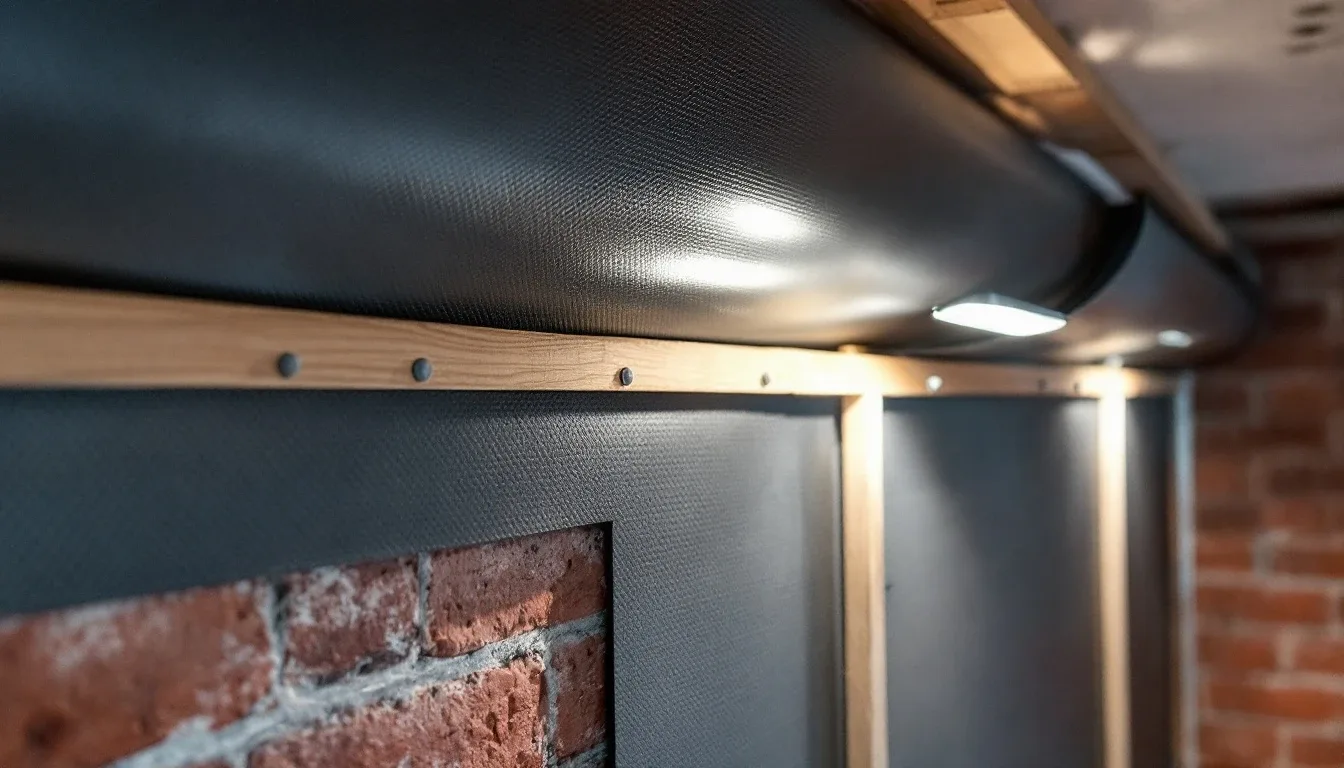
Plastic studded sheeting fixed to the internal wall face. Water passes through the wall, hits the membrane, and drains down to a collection channel at floor level. The channel connects to a sump and pump that removes water to external drainage.
When to use it
Basements with ground water pressure where external tanking is impractical. Solid walls with ongoing penetrating damp where repointing or render repairs have failed. Cellars being converted to habitable space where waterproofing from outside would require excavation.
How it works
The membrane creates a cavity between the wet masonry and the internal finish. Water entering the wall drains down behind the membrane instead of evaporating into the room. At floor level, a perforated drainage channel collects water and routes it to a sump. A pump lifts water to external drainage when the sump fills.
Application
- Fix studded membrane to wall with special plugs, studs facing inward
- Install perforated drainage channel at floor level
- Connect drainage channel to sump with pump (or gravity drainage if available)
- Seal all membrane joints with tape
- Batten over membrane and finish with plasterboard, or use specialist bonding plaster designed for membranes
Cost and lifespan
£60-120 per square metre for materials and installation. Sump pump adds £400-800. Membranes should last 50+ years4. Pumps need annual maintenance and replacement every 7-15 years.
Limitations
Requires ongoing pump maintenance. If pump fails and water backs up, the membrane will overflow. Reduces room size by 50-100mm depending on batten thickness. Creates a cold internal surface that may require insulation. Not suitable for rising damp where breathability is needed.
Method 3: Internal wall membranes (surface-applied)
What it is
Liquid or sheet membranes applied directly to the wall surface to create a waterproof barrier. These include cementitious slurry coats, epoxy paints, or self-adhesive plastic sheeting. The aim is to seal moisture behind the membrane so it cannot reach the room.
When to use it
Almost never for damp walls in habitable rooms. Surface membranes trap moisture behind them, which can cause masonry deterioration, mould growth in hidden areas, and plaster failure. They are occasionally used in utility rooms or garages where breathability is not a concern.
How it works
By creating an impermeable layer, surface membranes prevent moisture vapour escaping into the room. Moisture either stays in the wall or travels sideways to adjacent areas. In walls with hygroscopic salts, this can cause salts to crystallise behind the membrane and push it off the wall.
Cost and lifespan
£15-40 per square metre. Cheap to apply but often fails within 2-5 years on damp walls2. Historic England explicitly advises against impermeable membranes in traditional buildings.
Limitations
High risk of failure. Can make damp worse by trapping moisture and preventing natural drying. Should not be used in period buildings or anywhere breathability matters.
Method 4: Improve ventilation
What it is
Increasing air movement to help damp walls dry out and prevent condensation. Methods include passive vents (airbricks, trickle vents), mechanical extract fans, or positive input ventilation (PIV) systems that blow filtered air into the building.
When to use it
Condensation damp caused by humid indoor air. Drying out walls after damp treatment. Underfloor voids with insufficient airflow. Rooms with poor natural ventilation.
How it works
Ventilation removes humid air and replaces it with drier air from outside. This lowers indoor humidity and allows moisture in walls to evaporate. For condensation damp, ventilation is the primary treatment. For rising or penetrating damp, ventilation helps walls dry faster but does not stop water entering.
Application
- Passive airbricks: Install at high and low level to create cross-flow. For underfloor voids, install one airbrick per 1.5-2 metres of wall length.
- Mechanical extract fans: Bathroom and kitchen fans remove moisture at source. Install on external walls or duct to outside. Humidistat-controlled fans run automatically when humidity rises.
- PIV units: Mounted in loft space, blow filtered air into landing or hallway. This gently pressurises the building, forcing humid air out through trickle vents and gaps. Works well in homes with multiple occupants and high moisture generation.
Cost and lifespan
Passive vents: £20-60 per airbrick installed
Extract fans: £80-200 per fan fitted
PIV units: £400-800 including installation
Limitations
Ventilation only helps if damp is caused by condensation or if walls are drying out after treatment. It will not stop rising damp or penetrating damp from external water ingress. In winter, increased ventilation means higher heating bills.
What does not work
Painting over damp with waterproof paint
Seals moisture behind the paint film. Plaster will blow, paint will peel, and mould will grow in hidden areas. Anti-mould paint may delay mould growth by a few months but does not address the moisture source.
Dehumidifiers as a permanent fix
Dehumidifiers remove moisture from the air but do nothing to stop water entering walls. Useful during drying-out periods after treatment, but running a dehumidifier continuously is expensive and masks the problem rather than solving it.
PVA or wood glue to "seal" plaster before painting
Creates an impermeable layer that traps moisture. Plaster will eventually fail. PVA is a primer for sound, dry surfaces, not a waterproofing treatment.
Choosing the right internal treatment
| Damp type | Best internal treatment | Why |
|---|---|---|
| Rising damp (after DPC installed) | Renovating plaster | Allows walls to breathe and accommodates salts |
| Penetrating damp (cannot fix externally) | Cavity drain membrane | Channels water to drainage; works with active ingress |
| Condensation | Improved ventilation + insulation | Removes moisture from air; raises surface temperature |
| Basement with ground water pressure | Cavity drain membrane + sump pump | Only solution where external tanking is impractical |
| Residual moisture in old buildings | Lime plaster or renovating plaster | Maintains breathability; does not trap moisture |
Step-by-step: treating a damp wall internally with renovating plaster
- Confirm the damp cause is resolved. Check gutters, DPC, external drainage. If water is still entering, fix that first.
- Strip existing plaster. Hack off all plaster to 300mm above the highest damp point. Remove skirting boards and any timber in contact with damp masonry.
- Let walls dry. Wait 2-4 weeks if possible. Not essential with breathable systems but helps.
- Apply base coat. Mix renovating plaster according to manufacturer instructions. Apply 15-20mm thick. Use a scratch coat if walls are very uneven.
- Wait 7-14 days. Base coat must carbonate before finishing. Check manufacturer guidance.
- Apply finishing coat. 3-5mm gypsum skim or lime putty plaster. Trowel smooth.
- Wait 4-6 weeks before decorating. Use breathable paint (vinyl matt or clay-based). Do not use vinyl silk or gloss, which trap moisture.
Frequently asked questions
Can you treat damp walls from inside without external work?
Yes, but only if the damp cause is resolved. Internal membranes or renovating plaster can manage moisture in walls where external work is impractical, but they will not stop penetrating damp from ongoing leaks or failed external drainage. Treat the cause first, then manage symptoms internally.
What is the best internal damp treatment?
For rising damp or residual moisture after DPC installation: renovating plaster systems that allow walls to breathe and accommodate salt migration. For penetrating damp where external repair is impossible: cavity drain membranes that channel water to drainage points. For condensation: improved ventilation and insulation, not waterproofing.
Does painting over damp walls work?
No. Anti-mould paint or waterproof sealers applied over damp walls trap moisture behind them, causing plaster to blow and mould to grow in hidden areas. Paint is decoration, not damp treatment. Fix the moisture source first.
Can I use cavity drain membrane for rising damp?
Not recommended. Rising damp walls contain hygroscopic salts that need to evaporate. Cavity drain membranes trap moisture behind them, preventing natural drying. Use renovating plaster instead, which allows walls to breathe and accommodates salt crystallisation.
Sources and further reading
- Building Research Establishment (2007). BRE Digest 245: Rising damp in walls: diagnosis and treatment. Watford: BRE Press. (accessed 3 July 2026)
- Historic England (2016). Remedying Damp in Historic Buildings. Available: historicengland.org.uk (accessed 3 July 2026)
- Property Care Association (2023). Code of Practice for the Installation of Remedial Wall Coatings. Huntingdon: PCA. (accessed 3 July 2026)
- BS 8102:2022. Code of practice for protection of below ground structures against water ingress. London: BSI. (accessed 3 July 2026)
Related guides: Damp Wall Treatment Options · Damp Proof Plaster · Rising Damp Treatment