- Chemical DPC injection
- £40-70 per linear metre
- Physical DPC retrofit
- £60-100 per linear metre
- Renovating plaster
- £80-120 per m²
- Typical single room
- £2,000-4,000 (DPC + replastering)
- Basement tanking
- £150-250 per m²
What does damp proofing cost include?
A standard damp proofing quote includes three components: survey and diagnosis (often free with treatment), damp proof course installation, and post-treatment replastering. The breakdown varies by method.
Chemical DPC injection
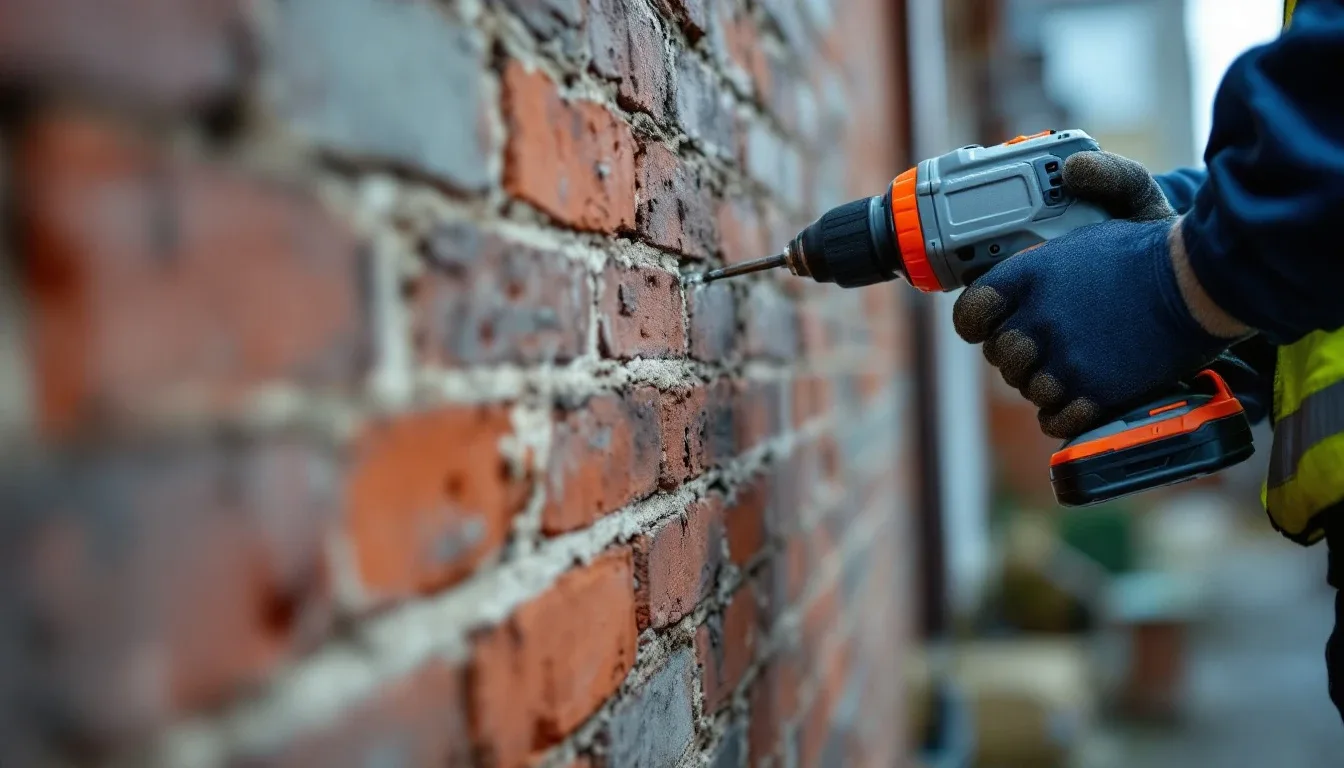
Chemical injection is the most common method for retrofitting a damp proof course. A specialist drills holes at 110-120mm spacing along the mortar bed joint, then injects silicone or silane cream under pressure. The chemical forms a water-repellent barrier as it cures over 7-14 days.1
Cost: £40-70 per linear metre for injection. This includes materials (silicone cream or gel), labour, and a 20-30 year guarantee. A terraced house with 10 metres of affected external wall costs £400-700 for injection alone.
Physical DPC installation
Physical DPC retrofit involves cutting a horizontal slot through the wall at mortar bed level, then inserting a waterproof membrane (plastic or stainless steel). More disruptive than injection, requiring specialist equipment and temporary wall support.
Cost: £60-100 per linear metre, 30-50% more than chemical injection. Typically used when chemical injection is unsuitable (very thick walls, certain stone types) or required by listed building consent. Carries the same 20-30 year guarantee as chemical DPC.2
Replastering with renovating plaster
Installing a new DPC stops rising damp, but existing plaster often remains contaminated with hygroscopic salts. These salts continue to draw moisture from the air, causing persistent damp staining even after the DPC works. Standard practice is to remove affected plaster to 300mm above the visible damp line and replace with renovating (salt-retardant) plaster.
Cost: £80-120 per m² for hack-off, replastering, and redecoration. A 3m x 3m room with damp to 1m high needs 12m² replastered, costing £960-1,440.
How much does damp proofing a whole house cost?
Whole-house damp proofing depends on property type and extent of rising damp. Most properties don't need every wall treated, only those in contact with damp ground.
Terraced house (typical): Front and rear external walls, 12-15m total. Chemical DPC: £480-1,050. Replastering 2 rooms: £1,600-2,400. Total: £2,000-3,500.
Semi-detached (3 bed): Three external walls, 18-22m total. Chemical DPC: £720-1,540. Replastering 3 rooms: £2,400-3,600. Total: £3,100-5,100.
Detached house (4 bed): Four external walls, 25-30m total. Chemical DPC: £1,000-2,100. Replastering 4 rooms: £3,200-4,800. Total: £4,200-6,900.
What affects damp proofing costs?
Wall thickness
Solid 9-inch (225mm) walls need injection from both sides, doubling the cost compared to single-skin walls. Cavity walls thicker than 280mm may need additional injection points.
Wall material
Brick is easiest to inject (standard drill bits, predictable absorption). Stone walls (granite, sandstone) require carbide-tipped bits and longer injection times. Flint and rubble-filled walls are most difficult, sometimes requiring physical DPC instead of injection.
Access and scaffolding
Ground-level internal walls are cheapest to treat. External walls above ground floor require scaffolding, adding £600-1,200 for a typical house. Basement walls accessed from inside need no scaffolding but may need temporary dehumidification (£150-300 per week hire).
Existing plaster condition
If existing plaster is sound but salt-contaminated, hack-off and replaster is required. If plaster is already loose or blown, you save on removal labour (only pay for disposal and replastering). Budget quotes often assume plaster removal is needed; get a surveyor to check before accepting.
How much does basement waterproofing cost?
Basement waterproofing is more complex than standard rising damp treatment. Three approaches exist: external tanking (excavate and apply bitumen membrane), internal tanking (apply waterproof render to inside walls), and cavity drain membrane system (create air gap behind walls).
External tanking: £150-250 per m² of wall area. Includes excavation, waterproof membrane, drainage layer, and backfill. Only possible where external access exists. Most effective but most expensive.
Internal tanking: £80-120 per m² of wall area. Waterproof cementitious render applied to internal surfaces. Cheaper than external but reduces room size by 25-50mm per wall. Vulnerable if floor above leaks.
Cavity drain membrane: £100-150 per m² of wall area. Plastic dimpled membrane fixed to walls creates 8mm air gap. Water runs down to perimeter drainage channel. Popular in conversions because it allows breathability and handles minor water ingress without failure.3
Should I pay for a guarantee?
Reputable damp proofing specialists offer 20-30 year guarantees backed by insurance (via British Wood Preserving and Damp-proofing Association or similar scheme). The guarantee covers DPC failure, not general building defects.
Cost difference: 5-15% more for guaranteed work compared to unguaranteed. A guaranteed job might cost £2,500 vs £2,200 for the same work without guarantee. Worth paying if you plan to sell the property (buyers' surveyors look for BWPDA guarantees) or want insurance-backed protection.
How to get an accurate damp proofing quote
Get three quotes from specialists holding PCA (Property Care Association) or similar certification. Avoid quotes based on photographs alone; surveyors must visit to use a moisture meter, check DPC height, and inspect plaster salts.
Ask quotes to specify: linear metres of DPC to be installed, method (chemical or physical), square metres of replastering, guarantee length and insurer, and whether scaffolding is included. A breakdown lets you compare like-for-like across quotes.