Home › Damp Proofing › Damp Course Explained
Damp Course Explained: What is a DPC and How Does it Work?
A damp proof course is a horizontal barrier built into walls to block rising damp from groundwater. Here's how they work, what they're made from, and what Building Regulations require.
9 min read · Last reviewed: 3 July 2026
Quick summary
- What it is: A water-resistant horizontal layer in walls, typically 150mm above ground level, that stops groundwater rising by capillary action
- When introduced: Common practice after the Public Health Act 1875; mandatory in Building Regulations since 1985
- Materials: Slate, engineering brick, bitumen felt, or modern polymer membranes in new builds; chemical injection or physical retrofit in existing buildings
- Cost to retrofit: £40-70/linear metre for chemical injection; £80-150/m for physical DPC insertion
- Regulations: Approved Document C (2022) requires DPCs at least 150mm above external ground level
- Required DPC clearance above ground
- 150mm
- Common practice after
- 1875 (Public Health Act)
- Mandatory in Building Regulations since
- 1985 (Approved Document C)
- Chemical DPC injection cost
- £40-70 per linear metre
- Typical chemical DPC guarantee
- 20-30 years
What is a damp proof course?
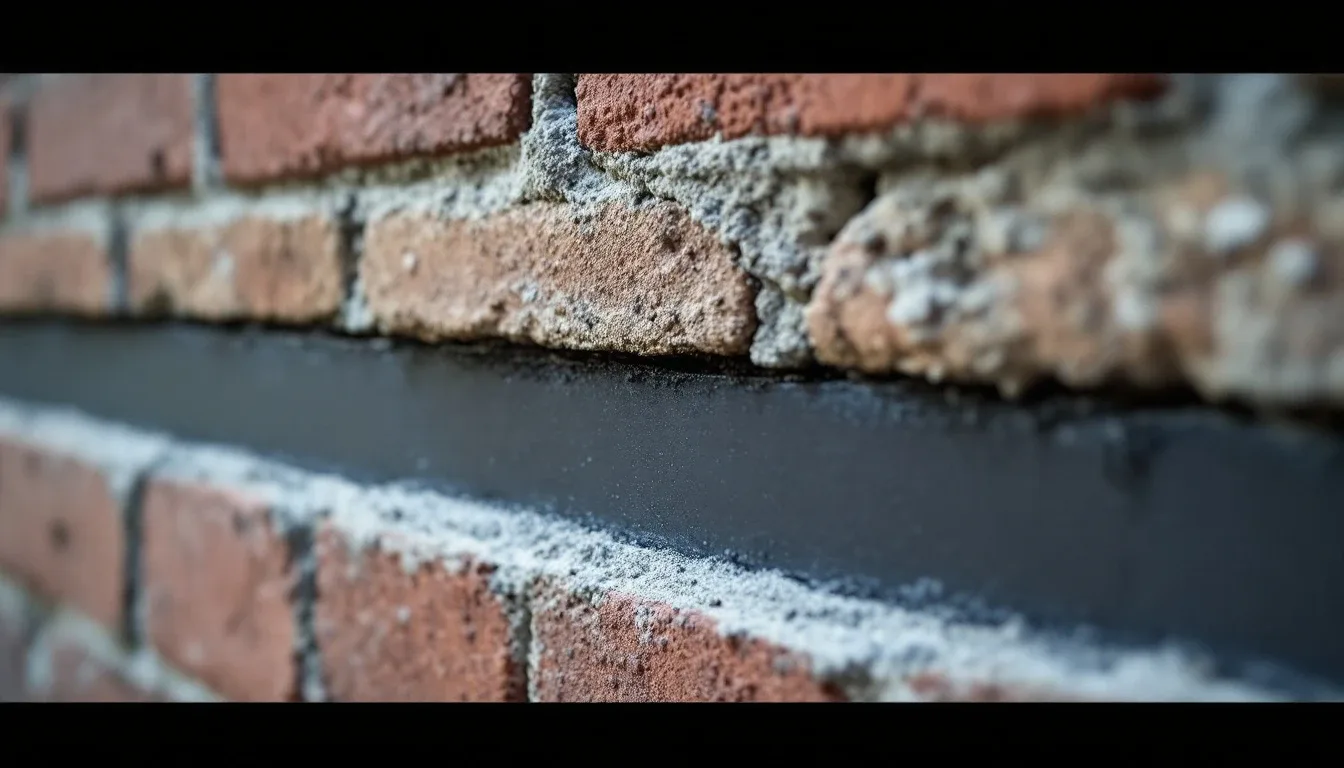
A damp proof course (DPC) is a continuous horizontal barrier built into the masonry of walls to prevent moisture from rising up through the structure. It works by breaking the capillary pathway that allows groundwater to climb through porous materials like brick and mortar.
The DPC sits in the mortar bed between two courses of bricks or blocks, typically 150mm above external ground level. This height was chosen because it keeps the barrier above typical ground splash height while remaining low enough to protect the entire wall above.
Without a DPC, moisture from the ground can rise to heights of 1-1.5 metres through capillary action,2 causing damp patches, salt staining, wallpaper damage, and timber decay in ground floor rooms.
DPC vs DPM: what's the difference?
A damp proof course (DPC) is a horizontal barrier in walls. A damp proof membrane (DPM) is a barrier under floors or behind walls. Both block moisture, but they're installed in different locations.
DPMs are typically plastic sheeting (often 300-micron polythene) laid under concrete floor slabs or behind basement walls. They cover large areas and connect to the DPC at the wall base to form a continuous barrier around the building's perimeter.
In retrofit projects, you'll sometimes see both terms used loosely. What matters is creating a complete moisture barrier around habitable spaces.
How does a damp proof course prevent rising damp?
Rising damp occurs when pore water in the ground is drawn upward through tiny capillaries in masonry. The narrower the capillary, the higher water can climb. In brick and mortar, this can reach 1-1.5 metres above ground level.
A DPC breaks this capillary pathway by inserting a non-porous layer that water cannot pass through. Modern DPCs are made from materials with zero or near-zero water absorption, so the capillary suction stops at the DPC line.
The key word is horizontal. A DPC only blocks vertical moisture movement. It does nothing to stop penetrating damp from rain hitting the wall face or condensation forming inside rooms.
DPC materials and installation methods
In new builds
Modern buildings use one of three DPC types during construction:
- Polymer membranes (most common): Polyethylene or polypropylene sheets, typically 0.5mm thick, sandwiched between mortar beds. Flexible, easy to work with, and cheap (under £5/linear metre).
- Bitumen felt: Hessian fabric impregnated with bitumen. Traditional choice in the 20th century, now largely replaced by polymers but still code-compliant.
- Engineering bricks: Two courses of Class B engineering brick (water absorption under 7%) can act as a DPC. Expensive but durable. Common in heritage or high-specification work.
Approved Document C (2022) specifies that DPCs must have water absorption below 0.03 litres per square metre and be capable of withstanding building settlement without tearing.
In existing buildings (retrofit)
Pre-1875 buildings often lack a DPC entirely. Later Victorian and Edwardian buildings may have slate DPCs that have cracked or become bridged by internal render. Two retrofit methods exist:
1. Chemical injection DPC
Holes are drilled at 100-120mm spacing along the mortar bed, 150mm above external ground. A water-repellent cream (silicone or resin-based) is injected under pressure. The chemical diffuses into the masonry and forms a water-resistant zone within 2-4 weeks.
Cost: £40-70 per linear metre. Least disruptive method. However, effectiveness depends on wall porosity. Dense bricks or very thick walls (450mm+) may require drilling from both sides.
2. Physical DPC insertion
A horizontal slot is cut through the mortar bed using a chain saw or disc cutter. A new polymer membrane is inserted and the slot is re-mortared. This creates a guaranteed barrier but requires temporary propping and is highly disruptive.
Cost: £80-150 per linear metre. Used where chemical injection has failed or where a structural guarantee is required (e.g., for mortgage purposes).
Regional note: Approved Document C applies to England only. Wales has its own version, issued separately by the Welsh Government since building control powers were devolved, though it mirrors the same 150mm clearance rule. Scotland does not use Approved Documents at all. Retrofit work there is judged against the Building Standards Technical Handbooks (Section 3: Environment), which set broadly equivalent moisture requirements in different language. Northern Ireland follows the Building Regulations (Northern Ireland) 2012, Technical Booklet C. All four nations require a continuous DPC roughly 150mm above ground with no bridging, but the guidance documents, inspection regimes, and building control sign-off procedures differ. If you're specifying retrofit work, particularly on a listed building, check which document applies in your area and whether the local conservation officer has additional requirements before a contractor starts drilling.
Building Regulations requirements
Approved Document C: Site preparation and resistance to contaminants and moisture (2022 edition) sets out the legal requirements:
- DPCs must be at least 150mm above the highest level of adjacent external paving, drainage, or ground.1
- The DPC must be continuous around the building perimeter and connect to any DPMs under floors.
- Where external ground slopes, the DPC must follow a stepped profile to maintain the 150mm clearance.
- DPCs must not be bridged by mortar droppings, render, or internal finishes that provide a moisture path past the barrier.
In practice, builders often install DPCs at 150mm exactly. If paving is later added without maintaining clearance, rising damp can occur despite a fully functional DPC. This is called bridging and is one of the most common causes of damp in modern buildings.
Common DPC failures and how they happen
Bridging
Render, internal plaster, or raised external paving that extends below the DPC line creates a moisture path that bypasses the barrier. This is not a DPC failure but an installation error.
Cracking or physical damage
Slate DPCs can crack if a building settles. Bitumen felt can tear if disturbed during renovation. Polymer membranes are more flexible but can still be damaged by movement or poor pointing above the DPC line.
Mortar bed deterioration
In very old buildings, lime mortar can wash out over decades, leaving the DPC unsupported. This is rare but can occur in exposed coastal locations.
Absent DPC
Any building constructed before 1875 is unlikely to have a DPC unless one has been retrofitted. Even buildings from 1875-1920 may have substandard or failed DPCs, as enforcement was patchy until the mid-20th century.
Do I need to retrofit a DPC?
Not always. A DPC is only necessary if you have confirmed rising damp. Many pre-1875 buildings have lived without DPCs for 150+ years3 and show no damp issues, particularly if they have:
- Breathable lime mortar and plaster that allows moisture to evaporate naturally
- Good external drainage and no raised ground levels
- No impermeable cement render trapping moisture inside walls
Historic England's guidance (Remedying Damp in Historic Buildings, 2016) explicitly cautions against unnecessary DPC installation in traditional buildings, which can cause more harm than the damp itself if breathability is compromised.
Get a specialist survey before committing to retrofit work. Many cases of suspected rising damp turn out to be penetrating damp (rain ingress) or condensation, neither of which a DPC will fix.
Frequently asked questions
What is the difference between DPC and DPM?
A DPC (damp proof course) is a horizontal barrier in walls that stops rising damp. A DPM (damp proof membrane) is a barrier under floors or behind walls that stops ground moisture. Both serve similar purposes but in different locations.
When did damp proof courses become mandatory in UK buildings?
DPCs became common practice after the Public Health Act 1875, which introduced minimum building standards. However, they only became a strict Building Regulations requirement with Approved Document C in 1985.
Can you retrofit a damp proof course?
Yes. Chemical injection DPCs can be retrofitted into existing walls by drilling holes and injecting silicone or resin-based cream. Physical DPCs can also be installed by cutting a slot in the mortar bed and inserting a membrane, though this is more disruptive.
How long does a chemical DPC last?
Manufacturers typically guarantee chemical DPCs for 20-30 years,4 though there is limited long-term field data beyond 30 years. Physical DPCs (polymer membranes) are expected to last the life of the building (60+ years) if installed correctly.
Does a DPC stop all types of damp?
No. A DPC only blocks rising damp from groundwater. It does not prevent penetrating damp (rain coming through walls), condensation (moisture in indoor air), or hygroscopic dampness (salt deposits pulling moisture from the air). Each type needs a different solution.
Sources and further reading
- HM Government (2022). Approved Document C: Site preparation and resistance to contaminants and moisture. Available: gov.uk
- Building Research Establishment (2007). BRE Digest 245: Rising damp in walls: diagnosis and treatment. Watford: BRE Press.
- Historic England (2016). Remedying Damp in Historic Buildings. Available: historicengland.org.uk
- Property Care Association (2023). Code of Practice for the Installation of Chemical Damp-proof Courses. Huntingdon: PCA. (accessed 3 July 2026)
Related guides: DPC Meaning · Damp Proofing Cost · Rising Damp Treatment · How to Treat Damp Walls Internally